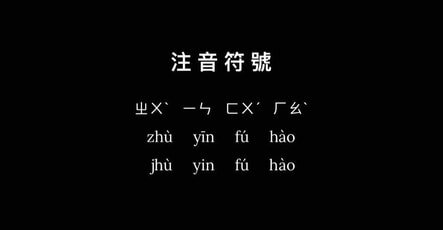
Mandarin Phonetic
注 音 符 號
zhù yīn fú hào
jhù yin fú hào
Modern Standard Mandarin | 現代標準漢語 | 標準中国語
b p m f
d t n l
g k h
j q x
ji ci si
zh ch sh r
jh ch sh r
z c s
i u ü
i wu yu
a o e ê
ai ei ao ou
an en ang eng
er
Start with pronunciation, then core words, then basic conversation. Use the examples and exercises to build each skill in turn.
Pronunciation first
Learn the sound system before analyzing grammar.
Words into sentences
Every small unit becomes a usable sentence immediately.
Characters after sound
Characters support words, not replace them.
Direct learning
Less theory, more actual Chinese.
Script decision
Spoken language
Standard Mandarin. Pronunciation trained via pinyin.
Writing system
This guide uses Traditional Chinese characters (正體字).
What to know
Traditional and Simplified are two scripts for the same spoken language. Strong learners recognize both eventually.
This is the actual foundation. Everything else depends on getting the sound system right.
Mandarin uses pitch to distinguish meaning. The same syllable with different tones becomes a different word.
1st tone
High level · 5→5
Steady and held, like sustaining a musical note.
mā 媽, gē 歌, shū 書
2nd tone
Rising · 3→5
Like the rising inflection when you ask 'huh?' in English.
má 麻, hé 河, rén 人
3rd tone
Low / dip · 2→1→4
In isolation it dips low then rises slightly. In connected speech it is often just low.
mǎ 馬, hěn 很, wǒ 我
4th tone
Sharp fall · 5→1
Short, firm, decisive. Like a sharp command.
mà 罵, shì 是, yào 要
Neutral tone
Light · varies
Unstressed and short. Its actual pitch depends on the tone before it.
ma 嗎, de 的, le 了
These tones change automatically in connected speech. You must learn them as rules, not exceptions.
| Rule | When it happens | Example | What changes |
|---|---|---|---|
| 3rd + 3rd → 2nd + 3rd | Two consecutive third tones | 你好 nǐ hǎo | Spoken as ní hǎo; first 3rd becomes 2nd |
| 不 bù → bú | Before a 4th tone | 不要 bù yào | Spoken as bú yào |
| 一 yī → yí | Before a 4th tone | 一個 yī gè | Spoken as yí gè |
| 一 yī → yì | Before 1st / 2nd / 3rd tones | 一天 yī tiān | Spoken as yì tiān |
Read these as Chinese sounds—not as English letters.
| Group | Pinyin | Mouth position |
|---|---|---|
| Labials | b p m f | Made with the lips together or lip-to-teeth |
| Alveolars | d t n l | Tongue tip touches the ridge behind front teeth |
| Velars | g k h | Back of the tongue against the soft palate |
| Palatals | j q x | Tongue fronted; lighter and thinner than English j/ch/sh |
| Retroflex | zh ch sh r | Tongue curls slightly back; a distinct Chinese sound group |
| Flat sibilants | z c s | Flatter, teeth closer together; contrast with zh/ch/sh |
| Zero initial | y w | Spelling conventions for vowel-start syllables |
These complete the syllable after the initial.
| Type | Pinyin | Example words |
|---|---|---|
| Simple | a o e i u ü | mā, bó, hē, nǐ, lù, nǚ |
| Compound | ai ei ao ou | hǎi, lèi, hǎo, dōu |
| Front nasal | an en in ün | lán, mén, xīn, jūn |
| Back nasal | ang eng ing ong | máng, děng, tīng, dōng |
| Common combos | ia ie iu ua uo üe | jiā, xiě, liù, huā, guó, xué |
These are the sounds most likely to cause persistent errors if not corrected early.
| Pinyin | Common mistake | Correct approach |
|---|---|---|
| j q x | Pronouncing like English j, ch, sh | Tongue stays forward; thinner, lighter sound than English equivalents |
| zh ch sh r | Confusing with z c s | Tongue curls back slightly; the retroflex series is a defining Chinese sound |
| z c s | Over-curling the tongue | Keep it flat and crisp; teeth almost together |
| ü | Saying English 'oo' | Round the lips while keeping the tongue forward, as in French 'u' |
| -ian | Saying 'ee-an' | Actually closer to 'yen'; the vowel cluster blends |
| -ui | Saying 'oo-ee' | Actually closer to 'way'; a quick glide |
| -iu | Saying 'ee-oo' | Actually closer to 'yo'; the sounds merge |
| er / -r suffix | Ignoring it or over-pronouncing | Important for listening comprehension; common in northern Mandarin |
Practice every combination. This is more useful than reading about tones.
| Pattern | Example | Meaning |
|---|---|---|
| 1 + 1 | 天空 tiān kōng | sky |
| 1 + 2 | 中國 Zhōng guó | China |
| 1 + 3 | 喝水 hē shuǐ | drink water |
| 1 + 4 | 吃飯 chī fàn | eat (a meal) |
| 2 + 1 | 明天 míng tiān | tomorrow |
| 2 + 4 | 甚麼 shén me | what |
| 3 + 3 | 你好 nǐ hǎo | hello |
| 3 + 2 | 美國 Měi guó | America |
| 4 + 1 | 大家 dà jiā | everyone |
| 4 + 4 | 再見 zài jiàn | goodbye |
Use this cycle every time you work with audio.
Listen once: what is happening?
Listen again: catch exact words and tone movement
Shadow: repeat immediately after the audio
Record yourself and compare rhythm
Fix one small issue at a time
Do not start with theory. Start with words and sentences you can use today.
Memorize these before anything else.
| Chinese | Pinyin | English |
|---|---|---|
| 你好 | nǐ hǎo | hello |
| 謝謝 | xièxie | thank you |
| 對不起 | duìbuqǐ | sorry |
| 不好意思 | bù hǎoyìsi | excuse me |
| 我是美國人 | wǒ shì Měiguó rén | I am American |
| 我學中文 | wǒ xué Zhōngwén | I study Chinese |
| 這個多少錢? | zhège duōshao qián? | how much is this? |
| 洗手間在哪裡? | xǐshǒujiān zài nǎlǐ? | where is the restroom? |
| 我聽不懂 | wǒ tīng bù dǒng | I do not understand |
| 請再說一次 | qǐng zài shuō yí cì | please say it again |
| 沒關係 | méi guānxi | it is okay / no problem |
| 再見 | zàijiàn | goodbye |
These are the building blocks for real sentences.
| Category | Chinese | Pinyin | English |
|---|---|---|---|
| Pronouns | 我 / 你 / 他 / 她 / 它 | wǒ / nǐ / tā / tā / tā | I / you / he / she / it |
| Plural | 我們 / 你們 / 他們 | wǒmen / nǐmen / tāmen | we / you (pl.) / they |
| Be | 是 | shì | to be (equative) |
| Have / exist | 有 | yǒu | to have; there is |
| Negation | 不 / 沒(有) | bù / méi(yǒu) | not / did not; do not have |
| Want / need | 要 / 想 | yào / xiǎng | want; will / would like to; miss |
| Can | 可以 / 會 / 能 | kěyǐ / huì / néng | may / know how to / be able to |
| Go / come | 去 / 來 | qù / lái | go / come |
| Eat / drink | 吃 / 喝 | chī / hē | eat / drink |
| See / look | 看 / 看見 | kàn / kànjiàn | look at / see |
| Say / speak | 說 / 講 | shuō / jiǎng | say; speak |
| Study | 學 / 學習 | xué / xuéxí | study; learn |
| Know | 知道 / 認識 | zhīdào / rènshi | know (a fact) / know (a person) |
| Like | 喜歡 | xǐhuan | to like |
| This / that | 這 / 那 | zhè / nà | this / that |
| Question words | 甚麼 / 哪裡 / 誰 / 怎麼 / 為甚麼 | shénme / nǎlǐ / shuí / zěnme / wèishénme | what / where / who / how / why |
| Time basics | 今天 / 明天 / 昨天 / 現在 | jīntiān / míngtiān / zuótiān / xiànzài | today / tomorrow / yesterday / now |
Memorize the pattern. Then replace one word at a time.
| Meaning | Pattern | Example |
|---|---|---|
| I am ... | 我是 + noun | 我是學生。 Wǒ shì xuéshēng. |
| I have ... | 我有 + noun | 我有問題。 Wǒ yǒu wèntí. |
| I want ... | 我要 + noun/verb | 我要咖啡。 Wǒ yào kāfēi. |
| I would like to ... | 我想 + verb | 我想去。 Wǒ xiǎng qù. |
| I like ... | 我喜歡 + noun/verb | 我喜歡中文。 Wǒ xǐhuan Zhōngwén. |
| I can ... | 我會 + verb | 我會說一點中文。 Wǒ huì shuō yìdiǎn Zhōngwén. |
| Where is ...? | ... 在哪裡? | 地鐵站在哪裡? Dìtiě zhàn zài nǎlǐ? |
| How much? | ... 多少錢? | 這個多少錢? Zhège duōshao qián? |
| Is it ...? (yes-no) | ... 嗎? | 你忙嗎? Nǐ máng ma? |
| I do not understand | 我聽不懂 | 我聽不懂。 Wǒ tīng bù dǒng. |
| Please say it again | 請再說一次 | 請再說一次。 Qǐng zài shuō yí cì. |
Do not just read silently. Speak both roles. Repeat until the lines feel automatic.
你好。
Nǐ hǎo.
Hello.
你好。你叫甚麼名字?
Nǐ hǎo. Nǐ jiào shénme míngzi?
Hello. What is your name?
我叫 Alex。你呢?
Wǒ jiào Alex. Nǐ ne?
My name is Alex. And you?
我叫小明。你是哪國人?
Wǒ jiào Xiǎo Míng. Nǐ shì nǎ guó rén?
I am Xiao Ming. What country are you from?
我是美國人。我在學中文。
Wǒ shì Měiguó rén. Wǒ zài xué Zhōngwén.
I am American. I am studying Chinese.
你要甚麼?
Nǐ yào shénme?
What would you like?
我要一碗牛肉麵。
Wǒ yào yì wǎn niúròu miàn.
I want a bowl of beef noodles.
要不要辣?
Yào bú yào là?
Do you want it spicy?
不要辣,謝謝。
Bú yào là, xièxie.
Not spicy, thanks.
好,一共八十塊。
Hǎo, yígòng bāshí kuài.
Okay, 80 kuai total.
請問,地鐵站在哪裡?
Qǐngwèn, dìtiě zhàn zài nǎlǐ?
Excuse me, where is the subway station?
往前走,然後左轉。
Wǎng qián zǒu, ránhòu zuǒ zhuǎn.
Go straight ahead, then turn left.
遠嗎?
Yuǎn ma?
Is it far?
不遠,大概五分鐘。
Bù yuǎn, dàgài wǔ fēnzhōng.
Not far, about five minutes.
謝謝你!
Xièxie nǐ!
Thank you!
不好意思,我聽不懂。
Bù hǎoyìsi, wǒ tīng bù dǒng.
Sorry, I do not understand.
請再說一次。
Qǐng zài shuō yí cì.
Please say it again.
請說慢一點。
Qǐng shuō màn yìdiǎn.
Please speak more slowly.
你可以寫下來嗎?
Nǐ kěyǐ xiě xiàlái ma?
Can you write it down?
這個中文怎麼說?
Zhège Zhōngwén zěnme shuō?
How do you say this in Chinese?
這個多少錢?
Zhège duōshao qián?
How much is this?
兩百五十塊。
Liǎng bǎi wǔshí kuài.
250 kuai.
太貴了。便宜一點可以嗎?
Tài guì le. Piányi yìdiǎn kěyǐ ma?
Too expensive. Can you give a discount?
兩百塊,好不好?
Liǎng bǎi kuài, hǎo bu hǎo?
200 kuai, okay?
好,我要。
Hǎo, wǒ yào.
Okay, I will take it.
Chinese grammar is pattern-based, not conjugation-based. Master the patterns and the language opens up.
Chinese follows SVO order like English—but time and place go before the verb.
| Function | Pattern | Example | Meaning |
|---|---|---|---|
| Statement | Subject + Verb + Object | 我學中文。 | I study Chinese. |
| Equative (be) | A 是 B | 她是老師。 | She is a teacher. |
| Have / exist | A 有 B | 我有兩個哥哥。 | I have two older brothers. |
| There is... | Place + 有 + Noun | 桌子上有一本書。 | There is a book on the table. |
| Negation (habit / future) | 不 + Verb / Adj | 我不喝咖啡。 | I do not drink coffee. |
| Negation (past / have) | 沒(有) + Verb | 我沒去。 | I did not go. |
| Yes-no question | Statement + 嗎 | 你忙嗎? | Are you busy? |
| A-not-A question | Verb 不 Verb | 你去不去? | Are you going or not? |
| What | 甚麼 | 你要甚麼? | What do you want? |
| Where | 在哪裡 | 你住在哪裡? | Where do you live? |
| Who | 誰 | 他是誰? | Who is he? |
| How | 怎麼 | 怎麼去? | How do you get there? |
| Why | 為甚麼 | 你為甚麼學中文? | Why do you study Chinese? |
| Location | A 在 B | 書在桌子上。 | The book is on the table. |
| Want (noun) | 要 + noun | 我要水。 | I want water. |
| Want (action) | 想 / 要 + verb | 我想去臺灣。 | I want to go to Taiwan. |
| Can (permission) | 可以 | 我可以坐這裡嗎? | May I sit here? |
| Can (learned ability) | 會 | 我會說中文。 | I can speak Chinese. |
| Can (physical ability) | 能 | 你能來嗎? | Can you come? |
| Progressive (ongoing) | 在 + Verb | 他在吃飯。 | He is eating. |
| Completed action | Verb + 了 | 我吃了。 | I ate / I have eaten. |
| Change of state | ... 了 | 下雨了。 | It started raining (new situation). |
| Experience | Verb + 過 | 我去過日本。 | I have been to Japan. |
| Comparison | A 比 B + Adj | 今天比昨天冷。 | Today is colder than yesterday. |
| Degree complement | Verb + 得 + description | 他說得很快。 | He speaks very fast. |
| Result complement | Verb + result | 我聽懂了。 | I understood (by listening). |
| Giving / for | 給 | 請給我一杯水。 | Please give me a cup of water. |
Chinese requires a measure word between a number and a noun. There is no way around this.
| Measure word | Used with | Example |
|---|---|---|
| 個 gè | General / default classifier | 一個人, 一個問題 |
| 本 běn | Books, bound items | 一本書, 一本雜誌 |
| 杯 bēi | Cups, glasses, drinks | 一杯咖啡, 一杯水 |
| 張 zhāng | Flat items: paper, tickets, tables | 一張票, 一張桌子 |
| 件 jiàn | Clothing; matters / incidents | 一件衣服, 一件事 |
| 台 tái | Machines, devices | 一台電腦, 一台車 |
| 位 wèi | People (polite) | 一位老師, 一位客人 |
| 家 jiā | Businesses, families | 一家公司, 一家餐廳 |
| 條 tiáo | Long narrow things: roads, fish, rivers | 一條路, 一條魚 |
| 雙 shuāng | Pairs | 一雙鞋, 一雙筷子 |
| 次 cì | Occurrences, times | 一次, 兩次 |
| 碗 wǎn | Bowls of food | 一碗飯, 一碗麵 |
| 瓶 píng | Bottles | 一瓶水, 一瓶酒 |
| 塊 kuài | Pieces; also 'yuan' (money) | 一塊蛋糕, 十塊錢 |
These sound the same but are written differently and serve different grammatical functions.
Possession / modification (noun-linking)
我的書 (my book), 好吃的菜 (delicious food)
Degree / result after a verb
他說得很快 (he speaks very fast)
Adverb marker before a verb
慢慢地說 (speak slowly)
These small words at the end of a sentence change the tone, mood, or function.
| Particle | Function | Example | Meaning |
|---|---|---|---|
| 嗎 ma | Yes-no question | 你好嗎? | Are you well? |
| 呢 ne | And you? / What about...? | 我很好,你呢? | I am fine, and you? |
| 吧 ba | Suggestion / assumption | 我們走吧。 | Let us go. |
| 了 le (sentence-final) | Change / new situation | 他走了。 | He has left. (new info) |
| 啊 a | Softening / exclamation | 好啊! | Okay! / Sure! |
| 嘛 ma (falling) | Isn't it obvious | 這很簡單嘛。 | This is simple (obviously). |
Characters are not random art. Component logic, frequency control, and word-family grouping beat brute-force memorization.
Most Chinese characters are semantic-phonetic compounds. One part hints at meaning category; the other hints at pronunciation. This is the single most important structural insight for character learning.
Start from words, not isolated characters
Learn 學生 as a word first; then notice 學 and 生 as components. Words stick better than abstract shapes.
Use component logic
Semantic parts hint at meaning (氵= water, 口 = mouth, 木 = wood). Phonetic parts hint at sound. This is not random art.
Prioritize frequency
A core 200–300 characters covers the majority of everyday text. Do not start with rare literary characters.
Handwrite enough to understand structure
Writing by hand forces attention to stroke order and component balance. After that, switch to typing for daily use.
| Pattern | Why it matters | Example |
|---|---|---|
| Semantic + phonetic compound | Most common structure; one part hints at meaning, one at sound | 媽 = 女 (female) + 馬 (mǎ sound) |
| Single-form character | High-frequency but limited pattern help; must memorize | 人, 大, 小, 中, 上, 下 |
| Word family approach | One character becomes a whole network of related words | 學 → 學生, 學校, 學習, 學費 |
| Component recycling | Same components appear across many characters; recognize once, read many | 請, 清, 情, 晴 all share 青 (qīng) |
Recognizing these radicals gives you a foothold when encountering new characters.
| Radical | Meaning hint | Found in |
|---|---|---|
| 氵 | Water / liquid | 河, 海, 洗, 湖, 清, 漢 |
| 口 | Mouth / speech | 吃, 喝, 叫, 唱, 嗎, 問 |
| 木 | Wood / plant | 樹, 林, 森, 桌, 椅, 校 |
| 心 / 忄 | Heart / feeling | 想, 思, 情, 怕, 慢, 快 |
| 女 | Female | 媽, 姐, 妹, 她, 好, 姓 |
| 人 / 亻 | Person | 你, 他, 們, 住, 做, 休 |
| 手 / 扌 | Hand / action | 打, 找, 拿, 把, 拉, 按 |
| 日 | Sun / day / time | 明, 時, 早, 晚, 星, 昨 |
| 火 / 灬 | Fire / heat | 燒, 煮, 烤, 熱, 照, 煎 |
| 言 / 訁 | Speech / language | 說, 話, 語, 謝, 請, 認 |
Do not start with dense native material. A staged ladder keeps difficulty just high enough to grow.
Ultra-short dialogues with pinyin visible. Focus on connecting sound to meaning.
1–3 sentence passages using only high-frequency characters. Limit new items per text.
Leveled stories with controlled vocabulary and natural repetition. Build stamina.
Menus, signs, social posts, news snippets, subtitles. Use a dictionary aggressively.
Writing is three separate skills. Train each one deliberately.
Practice stroke order and component balance by writing common characters by hand. This is training, not the long-term daily mode.
Use pinyin-based input on a keyboard or phone. The critical skill is selecting the correct character among many homophones.
Start with: self-introduction, daily routine, comparison, opinion, request, apology. Do not attempt essays before building these basics.
Chinese numbers follow a logical base-10 pattern. Time and date structure is straightforward once you learn the building blocks.
Chinese uses a clean base-10 system. 十一 = ten-one = 11. 二十三 = two-ten-three = 23.
| Number | Chinese | Pinyin |
|---|---|---|
| 0 | 零 | líng |
| 1 | 一 | yī |
| 2 | 二 / 兩 | èr / liǎng |
| 3 | 三 | sān |
| 4 | 四 | sì |
| 5 | 五 | wǔ |
| 6 | 六 | liù |
| 7 | 七 | qī |
| 8 | 八 | bā |
| 9 | 九 | jiǔ |
| 10 | 十 | shí |
| 11 | 十一 | shí yī |
| 20 | 二十 | èrshí |
| 100 | 一百 | yì bǎi |
| 1000 | 一千 | yì qiān |
| 10000 | 一萬 | yí wàn |
二 vs. 兩
Use 二 for counting and phone numbers. Use 兩 before measure words: 兩個人 (two people), 兩杯咖啡 (two coffees).
10,000 is the key unit
Chinese groups numbers by 萬 (10,000), not by 1,000. So 50,000 is 五萬, not fifty thousands.
Phone numbers
Read digit by digit. Use 一 for 1 (yāo is often used to avoid confusion with 七 qī).
Time words usually come before the verb: 我明天去 (I tomorrow go).
| Chinese | Pinyin | Meaning |
|---|---|---|
| 今天 | jīntiān | today |
| 明天 | míngtiān | tomorrow |
| 昨天 | zuótiān | yesterday |
| 現在 | xiànzài | now |
| 早上 | zǎoshang | morning |
| 下午 | xiàwǔ | afternoon |
| 晚上 | wǎnshang | evening / night |
| 星期一 ~ 日 | xīngqī yī ~ rì | Monday ~ Sunday |
| 一月 ~ 十二月 | yī yuè ~ shí'èr yuè | January ~ December |
| 幾點 | jǐ diǎn | what time |
| 三點半 | sān diǎn bàn | 3:30 |
| 差五分六點 | chà wǔ fēn liù diǎn | five minutes to six |
Language does not exist in a vacuum. These cultural patterns directly affect how you use Chinese in real situations.
Chinese speakers often use titles or roles instead of first names: 老師 (teacher), 醫生 (doctor), or surname + title like 王先生 (Mr. Wang). Using someone's bare first name can feel too casual outside close friendships.
Blunt refusal is often avoided. Phrases like 不太方便 (not very convenient) or 我再想想 (let me think about it) serve as softer ways to decline. A direct 不 (no) can sound abrupt in social contexts.
你吃了嗎?(Have you eaten?) is a common greeting, not a literal dinner invitation. Food is deeply social. Expect to discuss food, share dishes at round tables, and encounter the polite insistence of 'you order first.'
Gifts are usually declined once or twice before accepting. Red envelopes (紅包) containing money are given during Lunar New Year, weddings, and other occasions. Even numbers are preferred; avoid 4 (sounds like 'death').
面子 is the social concept of reputation and dignity. Avoiding public embarrassment (for yourself and others) is important. Correcting someone's mistake privately rather than in front of a group is the expected norm.
Traditional characters are used in Taiwan, Hong Kong, and Macau. Simplified characters are used in mainland China and Singapore. The spoken language is essentially the same. Strong learners eventually recognize both writing systems.
The jump to advanced is about precision, rhythm, discourse control, and naturalness—not just vocabulary volume.
其實 (actually; soft correction)
然後 (then; sequence marker)
所以 (so; therefore)
不過 (however; but)
就是 (it is just that; in spoken explanation)
反正 (anyway; regardless)
Spoken forms differ from formal written forms
請 adds politeness; 麻煩你 is 'please bother yourself'
您 is the polite 'you' for elders or formal settings
Recognizing register differences is an advanced skill
Chinese packages meaning differently from English
把 construction reframes the object as the topic of the action
Topic-comment structure is common: 這本書我看過 (this book, I have read it)
Train yourself to ask: what would a Chinese speaker naturally choose?
Advanced learners must work on sentence melody and chunking
Correct individual syllables mean little if sentence rhythm is unnatural
Shadowing native speakers at full speed is the key exercise
Erhua, reduction, and connected speech patterns become targets
Pick one lesson. Repeat it until every item feels stable in your mouth and ear before moving on.
Choose a lesson
Read, say, and review each item.
Simple finals: a o e i u ü
Labials: b p m f
Alveolars: d t n l
Velars: g k h
Palatals: j q x
Retroflex: zh ch sh r
Flat sibilants: z c s
Four tones: mā má mǎ mà
Tone pair drill: all 16 combinations
Tone sandhi: 3rd + 3rd, 不, 一
These are not small details. They are the habits most likely to slow progress or create false confidence.
nǐ hǎo is not two English words
It is a tone pair. The first 3rd tone changes to rising (tone sandhi). Say it as one fluid Chinese unit, not with English stress patterns.
j, q, x are not English j, ch, sh
Push the tongue farther forward. The sound is thinner and produced closer to the front palate.
ü is not 'oo'
Round the lips while keeping the tongue forward. This vowel does not exist in English.
了 is not just 'past tense'
了 marks completion or a change of state. It is an aspect marker, not a tense marker. 下雨了 means 'it started raining' (new situation).
是 is not always needed
Chinese adjectives function as verbs. Say 我很忙 (I am busy), not 我是很忙. 是 is for equating nouns.
Confusing 的, 得, 地
的 links nouns/modifiers. 得 follows verbs for degree. 地 marks adverbs before verbs. They sound alike but are written differently.
Using English word order for everything
Time and place come before the verb in Chinese: 我明天在家吃飯 (I tomorrow at-home eat). Subject → Time → Place → Verb → Object.
Ignoring tones in connected speech
Getting individual tones right is not enough. Tone pairs and tone sandhi in flowing sentences must be practiced.
Mandarin Chinese Learning Guide
© 2026 EugeneYip.com All Rights Reserved.